The Network
Re-inventing offshore jurisdictions, SEZs and Web3 technology
Rather than seeing offshore, SEZs and Web3 as anomalies or threats to existing systems, Island Network sees them as critical to progress towards a peaceful planetary civilization, because they provide a foundation for regulatory flexibility, economic efficiency and technological innovation.
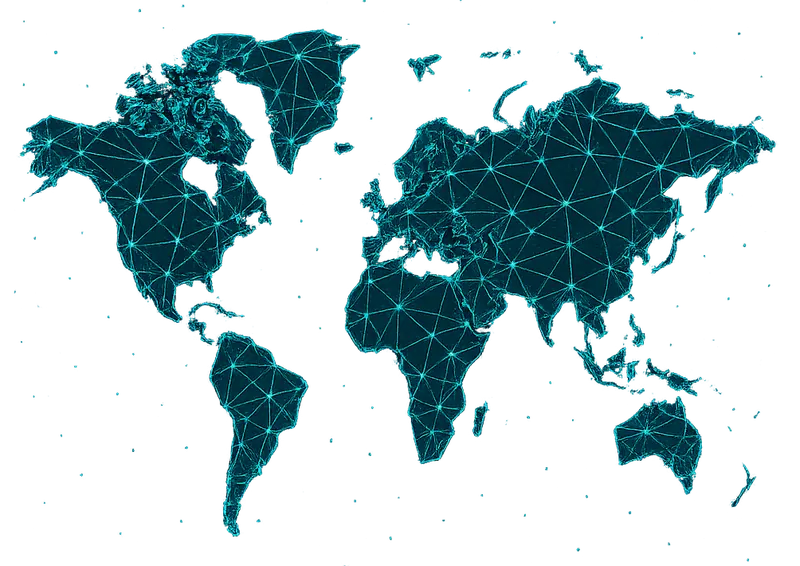
Traditionally, small islands struggle
- Infrastructure gaps
- Retaining people is difficult
- Resources can be scarce
- Weather has greater impact
Emerging technologies + network state = real opportunity.
Islands can be pioneers of a new planetary-level civilization.
An Island Network will
- (a)Provide the sovereign layer for a global Metaverse economy with its own rules.
- (b)Naturally evolve into a sustainable stewardship of the ocean, cleaning up pollution and repurposing useful resources.
- (c)Expand into future living with RWA tokenization and infrastructure built on a cosmo-local approach.
Core architecture · interactive
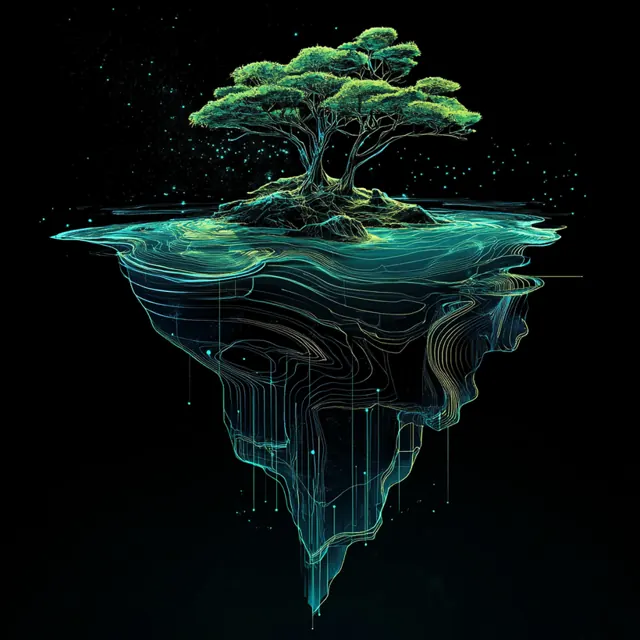
The dual-layer jurisdiction
Select a layer of the island to read its role.
Layer 2
RWA & Ecology
The physical manifestation. Focuses on real-world asset regeneration, infrastructure, and physical life.
“Expand into future living with RWAs tokenization, infrastructure built on a cosmo-local approach [aka Metaverse first, then adapt to local needs and build].”
Island Network project deck
The Bridge
Tokenization
Connects value systems to physical territory via smart materials and RWA models.
“This allows for more economic freedom in the Metaverse layer, which would be subject to its own rules, and more sustainable development in the “real world” layer.”
Island Network project deck
Layer 1
The Metaverse Protocol
The ‘Blue Ocean’ connecting islands. Provides economic freedom, governance experimentation, and digital coordination.
“Provide the sovereign layer for a global Metaverse economy with its own rules, where people would be able to self-express and grow economically and where we would be able to radically innovate new corporate and social structures.”
Island Network project deck
Five-layer civilization stack · interactive
From the living cell to the federation
Each layer reinforces the others. The system is modular, interoperable and recursively scalable. Select a layer.
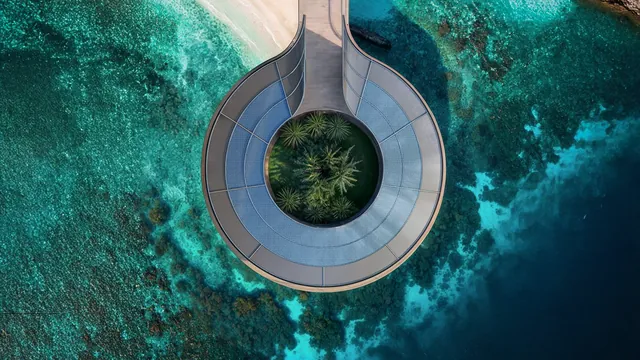
Layer 1 · The Sovereign Living Cell
House of the Future
The House of the Future is the minimum viable sovereignty unit. It is not a “smart home.”
Core systems
- Metabolic layer
- Cognitive layer
- Human layer
- Operational layer
PrincipleAncient Skeleton + Future Nervous System
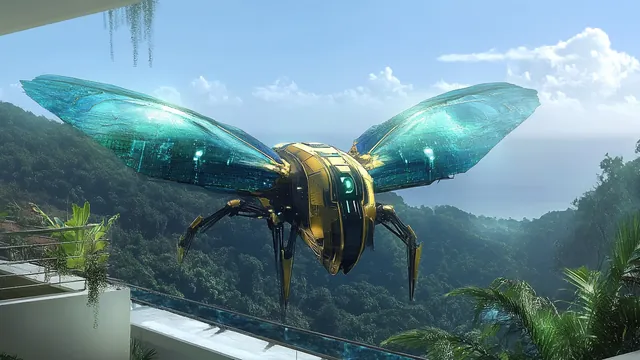
Layer 2 · Distributed Production Infrastructure
Maker House
The Maker House transforms communities from passive consumers into active producers.
Core systems
- Fabrication systems
- Repair economy
- Educational systems
- Cultural production
PrincipleFabrication lab, repair ecosystem, educational node, experimentation space, economic resilience engine
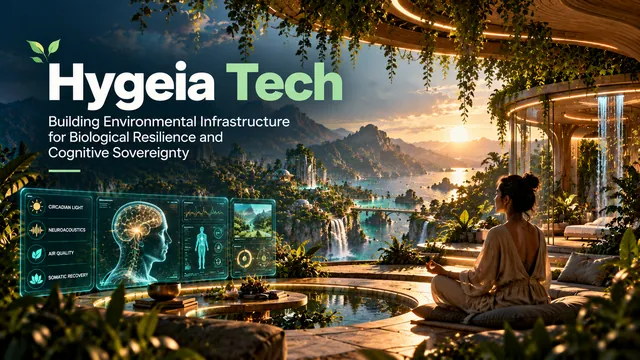
Layer 3 · Human Regeneration Infrastructure
Hygeia Tech
This layer treats human coherence as infrastructure.
Core systems
- Nervous system regulation
- Embodied learning
- Immersive environments
- Ecological coherence
PrincipleTechnology must restore more than it extracts
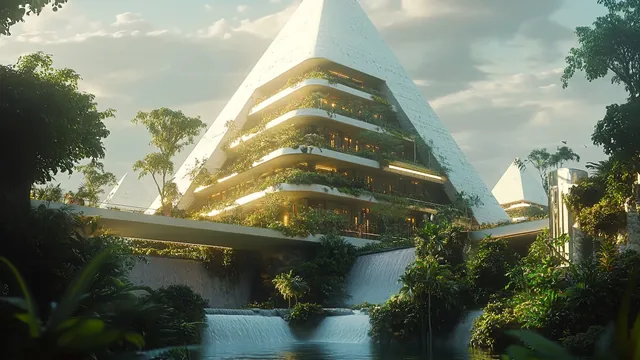
Layer 4 · Civic and Coordination Infrastructure
Innovation Pyramid
Monasteries preserved knowledge, ports coordinated trade, universities coordinated cognition, temples coordinated meaning. The Innovation Pyramid integrates all four.
Core systems
- Governance layer
- Compute layer
- Infrastructure layer
- Educational layer
- Cultural layer
PrincipleMultipurpose infrastructure
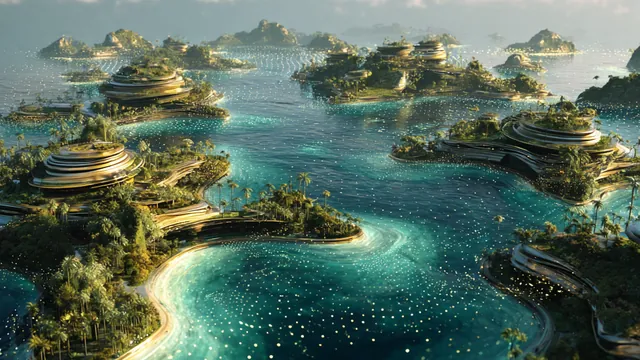
Layer 5 · Planetary Archipelago Civilization
Island Federation
This is not an empire. It is a federation of regenerative sovereign systems.
Core systems
- Governance interoperability
- Economic interoperability (Proof-of-Value)
- Identity interoperability
- Infrastructure interoperability
PrincipleExit rights, voice, legibility, non-domination, auditability, bounded sovereignty
Source: Island Network Resilience Infrastructure Playbook and White Paper Concept. See the labs in depth at reizen.xyz ↗.
Operating protocols
Five values around sovereign coordination
- 01
Agency
Individuals choose jurisdictions aligned with their values.
- 02
Stewardship
Territory is maintained, not exploited; reality-alignment with Nature.
- 03
Experimentation
Different systems coexist and are tested safely.
- 04
Interoperability
Jurisdictions interact without collapsing into uniformity.
- 05
Pluralism
Replacing homogenization with modular, opt-in governance.
Economic model
Four interconnected economies
The white paper describes Island Network as operating across four interconnected economies.
Venture Economy
Frontier founders building inside bounded, opt-in environments.
Commons Economy
Shared institutions and knowledge. In Cayman, the DAO345 Foundation is the Commons container. DAO345 →
Service Economy
Residencies, education, fabrication and care that keep nodes running.
Cultural Economy
Culture itself becomes productive infrastructure.
Pilot strategy
Four phases
- Phase 1
Retrofitted Living Laboratories
Sardegna stone houses, island retrofits and adaptive-reuse prototypes, to demonstrate viability, preserve heritage, test governance, validate systems and establish cultural legitimacy.
- Phase 2
Maker + Hygeia Hubs
Fabrication systems, techno-art residencies, wellness infrastructure, educational campuses, regenerative tourism.
- Phase 3
Innovation Pyramid
Integrated civic infrastructure: governance, compute, energy, desalination, education and AI coordination.
- Phase 4
Federation Layer
Nodes interconnected through interoperable governance, decentralized identity, sovereign cloud systems, AI orchestration and regenerative coordination protocols.
Brand perception matrix
What Island Network is, and is not
- A real estate projectA system for designing sovereign jurisdictions.
- A generic ‘innovation hub’A programmable governance environment.
- A vague sustainability initiativeSustainable stewardship of ocean and territory.
- A standard Web3 experimentThe sovereign layer for a global Metaverse economy.